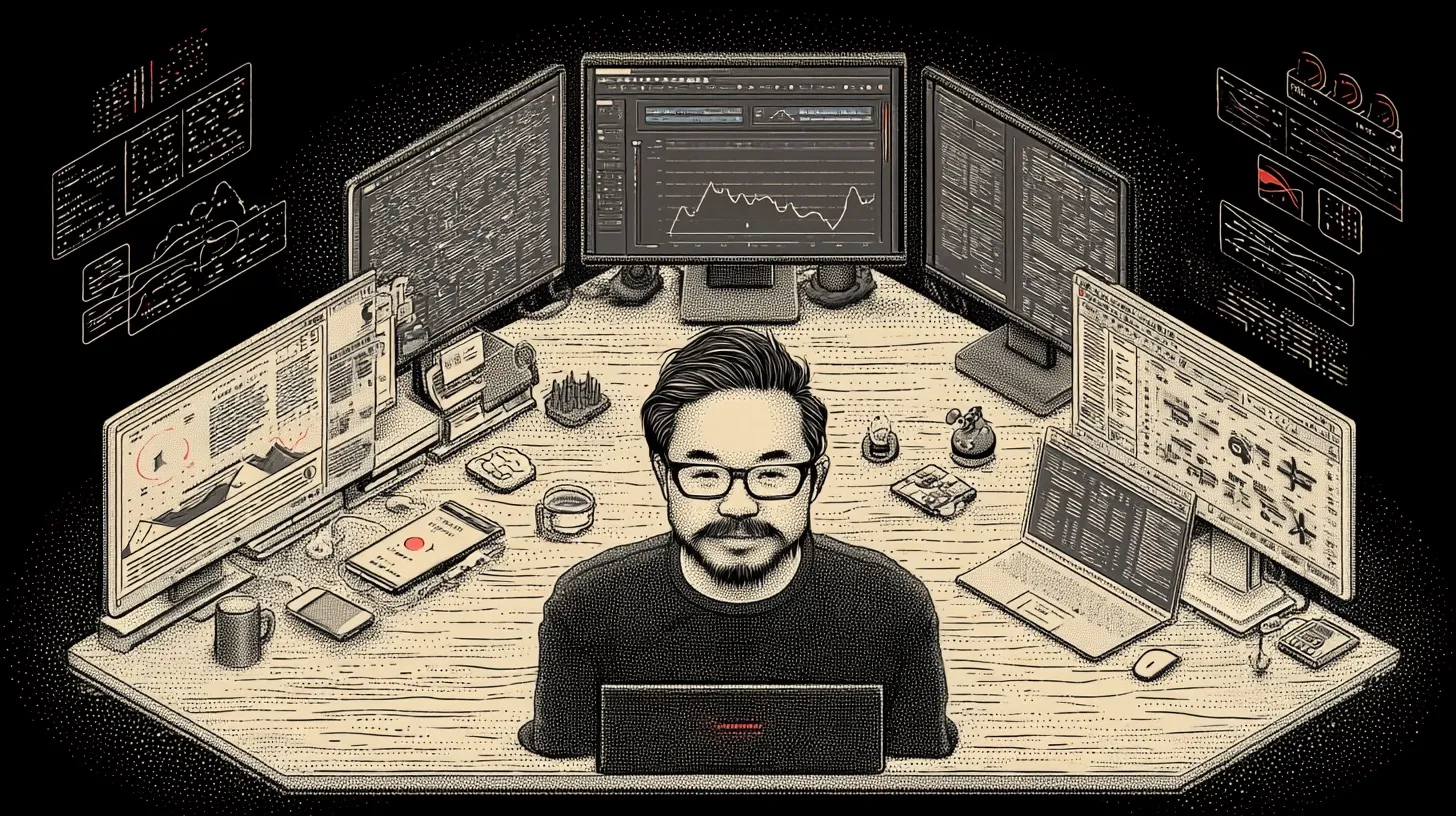
The Garry Tan Stack: A Definitive Guide to gstack
Garry Tan wrote 600K lines of code in 60 days using gstack. Here's the definitive breakdown of what gstack is now, how it works, and why founders should.
Apr 6, 2026
12 min read
Updated Apr 13, 2026
TL;DR: gstack started as Garry Tan’s opinionated Claude Code stack. In practice it has become something broader: a portable workflow layer that now spans Claude Code, OpenClaw, Codex, Cursor, and other agent hosts. As of April 13, 2026, the official repo shows 71,000+ GitHub stars and 10,000+ forks. I’ve been using it myself; the
/csosecurity skill alone found three real vulnerabilities in my codebase in 20 minutes.
Garry Tan is the CEO of Y Combinator — the startup accelerator that launched Airbnb, Dropbox, Stripe, Coinbase, and hundreds of the biggest tech companies in the world. He’s not a typical CEO. He was an early designer and engineering manager at Palantir, co-founded the blogging startup Posterous (sold to Twitter), and in 2013 single-handedly built Bookface, YC’s internal social network.
In March 2026, he open-sourced something that broke the internet: gstack.
In 60 days, using the system he was about to share publicly, Garry had written over 600,000 lines of production code — 35% tests — while holding down the full-time job of running the world’s most powerful startup accelerator. His last 7-day retro clocked 140,751 lines added, 362 commits, ~115,000 net lines. Not by a team. By one person, part-time.
One CTO texted him after installing it: “Your gstack is crazy. This is like god mode. Your eng review discovered a subtle cross-site scripting attack that I don’t even think my team is aware of.”
At SXSW 2026, Tan told the audience he had “cyber psychosis” and was barely sleeping. “I don’t need modafinil with this revolution. I’m up. I slept at 4am. I woke up at 8am. I wanted to sleep more, but I couldn’t because: Let’s see what’s going on with the 10 workers.”
This is the definitive breakdown of what gstack is, how it works, and why it matters for founders. Updated April 2026 to reflect major changes since launch.
What gstack Has Become Since Launch
When this article first ran, the big story was simple: Garry Tan had open-sourced the private Claude Code setup he was using to ship at absurd speed.
That story is still true. It just is not the whole story anymore.
As of April 13, 2026, the official repo shows 71,615 stars and 10,086 forks. The repo description now calls gstack “23 opinionated tools”, while the README frames it as 23 specialists and eight power tools.
That tells you how to think about gstack now: not as a bag of prompts, but as an operating layer.
Here’s what changed:
Team mode is real. The README now pushes a proper shared-repo setup: global install, ./setup --team, then gstack-team-init required or optional inside the repo. No vendored skills, no version drift, no manual “did everyone update?” dance.
It is no longer Claude-only in practice. The official setup now supports named hosts like Codex, OpenCode, Cursor, Factory Droid, Slate, and Kiro via ./setup --host <name>. The workflow layer is becoming portable.
OpenClaw is now part of the ecosystem. Four gstack methodology skills ship as native OpenClaw installs: gstack-openclaw-office-hours, gstack-openclaw-ceo-review, gstack-openclaw-investigate, and gstack-openclaw-retro.
clawhub install gstack-openclaw-office-hours gstack-openclaw-ceo-review gstack-openclaw-investigate gstack-openclaw-retroThe operating system got deeper. /learn, /pair-agent, /codex, and /open-gstack-browser are not cosmetic additions. They make the system more stateful, more cross-model, and more multi-agent than the original launch framing suggested.
I’ve Been Using It Too
I’m Cat. I run BestSelf Co and Little Might. I started using gstack shortly after this piece ran, and I’m a convert.
My take after six weeks: the /cso security skill alone is worth the install. I ran it on a project I’d been building for two months and it found three real issues in 20 minutes. Not theoretical — actual OWASP-class findings with concrete exploit scenarios.
The other thing that surprised me: /retro global across all my AI tools. I didn’t realize how much I was paying for in parallel Claude and Codex sessions until I saw it laid out as a weekly line item.

My tweet from April 2, 2026 — yes, I’m genuinely using this.
What Is gstack?
gstack is an open-source collection of 23+ structured skills — most famous in Claude Code, but now installed across multiple agent hosts — that turn a single AI coding session into a virtual engineering team you actually manage.
Not a copilot. Not autocomplete. A team.
Here’s the full breakdown, organized the way you’d actually reach for it:
Think
Clarify the problem
/office-hoursreframes the product before you code/plan-ceo-reviewhunts for the 10-star version/plan-eng-reviewlocks architecture, edge cases, and tests/plan-design-reviewpressure-tests UI and UX quality/plan-devex-reviewaudits the developer experience
Design
Shape the interface
/design-consultationcreates the design system/design-shotgunexplores multiple directions fast/design-htmlturns the plan into production HTML/design-reviewaudits the live implementation
Build
Execute the sprint
/autoplanchains review stages automatically/investigatedoes root-cause-first debugging/reviewcatches production-class bugs before merge/codexbrings in a second model opinion
QA
Test reality
/qa, /qa-only, /browse, /setup-browser-cookies, and /devex-review handle browser testing, auth, and onboarding friction.
Ship
Release safely
/ship, /land-and-deploy, /canary, /benchmark, and /document-release cover the path from PR to production verification.
Operate
Keep the system healthy
/retro, /learn, /careful, /freeze, and /guard keep the team learning, safe, and hard to derail.
The Philosophy: A Sprint, Not a Pile of Commands
gstack isn’t just a collection of prompts. It’s a process — ordered the way a real sprint runs:
Think → Plan → Build → Review → Test → Ship → Reflect
The loop. Start at Think, end at Reflect, carry what you learned into the next sprint.
Each step feeds the next. /office-hours writes a design doc that /plan-ceo-review reads. /plan-eng-review writes a test plan that /qa picks up. /review catches bugs that /ship verifies are fixed. Nothing falls through because every skill knows what came before it.
The real unlock: once you have the process, you can run 10-15 of these sprints in parallel — different features, different branches, different agents — all at once. That’s how Tan ships 10,000+ lines per day while being a CEO.
Where g-brain Fits
The gstack conversation gets confusing fast because people collapse workflow, runtime, and memory into one idea.
They are not one idea.
Three layers, one ecosystem. gstack is the playbook. OpenClaw runs the agents. g-brain is what they know.
Workflow
gstack
The methodology layer: planning, review, QA, shipping, retros, and operator rituals.
Runtime
OpenClaw
The always-on assistant runtime: channels, tools, cron, sessions, voice, and apps.
Brain
g-brain
The long-term knowledge layer: searchable context your agent reads before responding and writes back to after.
If you want the fuller picture, read What Is g-brain?. It matters because gstack now makes more sense as part of an ecosystem than as a standalone Claude Code trick.
The Numbers That Made Everyone Stop
People dismissed AI coding assistants as fancy autocomplete. Then Garry showed his GitHub contribution graph.
2026 (with gstack): 1,237 contributions in under 90 days.
2013 (building Bookface solo): 772 contributions, full year.
Same person. Same skills. The difference is the tooling.
The math is blunt: 600,000 lines in 60 days = 10,000 lines per day, part-time, while running YC. His previous best (building Bookface in 2013) was with full focus and a full team.
As of April 13, 2026, GitHub shows 71,615 stars and 10,086 forks. Engineers do not star repos at that scale unless the repo has become genuinely useful.
The /office-hours Moment — Why This Is Different
Most coding tools start with code. gstack starts with the problem.
/office-hours asks six forcing questions: what’s the actual pain (specific examples, not hypotheticals)? Who loses? Why hasn’t this been built? What’s the smallest version that proves it works?
When Tan demoed it at SXSW, the example was a user who said: “I want to build a daily briefing app for my calendar.”
The agent’s response:
“I’m going to push back on the framing. You said ‘daily briefing app.’ But what you actually described is a personal chief of staff AI.”
It then extracted 5 capabilities the user didn’t realize they were describing, challenged 4 premises, generated 3 implementation approaches with effort estimates, and recommended shipping the narrowest wedge first.
That’s not autocomplete. That’s a cofounder who isn’t afraid to tell you you’re building the wrong thing.
The Controversy
Not everyone loved it. TechCrunch noted the backlash from developers who argued it was “vibe coding at scale” — the risk of shipping 600,000 lines you don’t fully understand.
The criticism is real. AI-generated code at velocity means bugs that pass CI can still blow up in production. The XSS attack the CTO’s team didn’t know about — gstack found it, but it existed in their repo presumably because of fast AI coding in the first place.
Tan’s answer to this is baked into the system: /review specifically hunts for production-class bugs that automated tests miss. /careful and /guard add safety rails before destructive commands. And /ship bootstraps test frameworks and runs coverage audits — enforcing the rule that 35% of Tan’s 600k lines were tests.
The community security wave (v0.15.7-13) shows the project taking this seriously: 14+ security fixes merged in a single week, with 8 external contributors finding and fixing issues. The tool that finds your security bugs now has its own security bugs found and fixed by the community.
The philosophy: don’t slow down, but build in the QA discipline that makes speed safe. Structure replaces supervision.
The SKILL.md Standard — Now Running Across Agent Hosts
One underrated aspect of gstack: it started in Claude Code, but it’s getting less Claude-specific every week.
The skills are built on the SKILL.md standard — a portable format the gstack README now installs across multiple hosts:
Default host
Claude Code
Installs to ~/.claude/skills/gstack-*/.
Alt hosts
CLI agents
—host codex, —host opencode, —host cursor, —host factory, —host slate, and —host kiro install into each tool’s own skills directory.
No local session
OpenClaw
Runs via ClawHub in a conversational workflow instead of a local Claude Code session.
# Auto-detect which agents you have
git clone --single-branch --depth 1 https://github.com/garrytan/gstack.git ~/gstack
cd ~/gstack && ./setup
This matters for founders running multi-agent setups. The same sprint workflow runs on whichever agent is best for the job.
How to Install gstack in 30 Seconds
For Claude Code, the official install is still:
git clone --single-branch --depth 1 https://github.com/garrytan/gstack.git ~/.claude/skills/gstack
cd ~/.claude/skills/gstack && ./setup
If you want a different host, the README now documents named targets like --host codex, --host cursor, and --host opencode.
Team mode (recommended for shared repos)
# Each developer installs globally:
cd ~/.claude/skills/gstack && ./setup --team

# Bootstrap your repo once so teammates get it automatically:
cd <your-repo>
~/.claude/skills/gstack/bin/gstack-team-init required
git add .claude/ CLAUDE.md && git commit -m "require gstack for AI-assisted work"
No vendored files in your repo, no version drift, auto-updates every session.
Start here: /office-hours — describe what you’re building. Don’t touch code yet. Let it reframe the problem first.
What It Means for Founders
Garry Tan isn’t a solo developer playing around. He’s the CEO of an institution that has shaped the modern startup economy — and he’s using this to ship production code, in parallel, as a side activity to his actual job.
The implications:
-
The 10-person startup is compressing to 1-2. Garry’s explicit claim: “I was able to re-create my startup that took $10 million in VC capital and 10 people.” That cost compression isn’t incremental.
-
Velocity advantage is now a skill. Founders who can work this way will outship their competitors without proportionally more people. The bottleneck shifts from “can we build this” to “can we decide what to build.”
-
The SKILL.md ecosystem is emerging. gstack is one implementation, but the standard it uses is becoming a platform. Agent-native tools, workflows, and shared skill libraries are the new app stores.
-
YC’s bar is about to rise. When the CEO of YC can personally validate that a startup’s tech approach is sound by running
/reviewon their repo, the bar for “we have engineers” is changing. -
Teams aren’t exempt. Team mode wasn’t in the original launch. It’s here now because solo founders who got hooked brought gstack to their teams. The skills are already in engineering org CLAUDE.md files at real companies.
The GitHub Repo
→ garrytan/gstack (MIT license, free)
As of April 13, 2026, GitHub shows 71,615 stars and 10,086 forks. The repo is still moving daily.
The README is one of the best pieces of founder writing from 2026. Worth reading in full even if you never install the tool — it’s a vision statement for where software development is going.
Related Reading
- What Is Claude Code? — The foundation. gstack runs on top of Claude Code, so start here if you’re new.
- Claude Code Skills — The SKILL.md standard gstack is built on, explained.
- What Is g-brain? — The missing piece if you want to understand the broader Garry ecosystem.
- OpenClaw Review — If you want the always-on runtime layer, not just the workflow layer.
- AI Agent Use Cases for Founders — If gstack’s use cases resonate, this is the next read.
Garry Tan is President & CEO of Y Combinator. gstack is open source, MIT license, available free at github.com/garrytan/gstack. Originally published March 21, 2026, updated April 13, 2026.

Written by
Cathryn Lavery
Cathryn went from designing buildings to architecting products. She founded BestSelf, bought it back from private equity in 2024, and rebuilt it AI-native. She's currently building something new in AI. Little Might is where she doesn't have to keep it all in her head.
Related reading
-
Apr 20, 2026
How I Rebuilt My AI Agent Team After Anthropic Cut Off OpenClaw
-
Apr 4, 2026
AI Automation Examples: 9 Specific Business Cases (With Real Numbers)
-
May 27, 2026
How I Plan Projects With AI: The Beads Workflow
-
May 27, 2026
Six Non-Coding Things You Can Do With Claude Code
-
May 5, 2026
How to Give AI Agents Real Access Without Risking Your Data